Home » Services » Chimney Services » Chimney Damper Repair
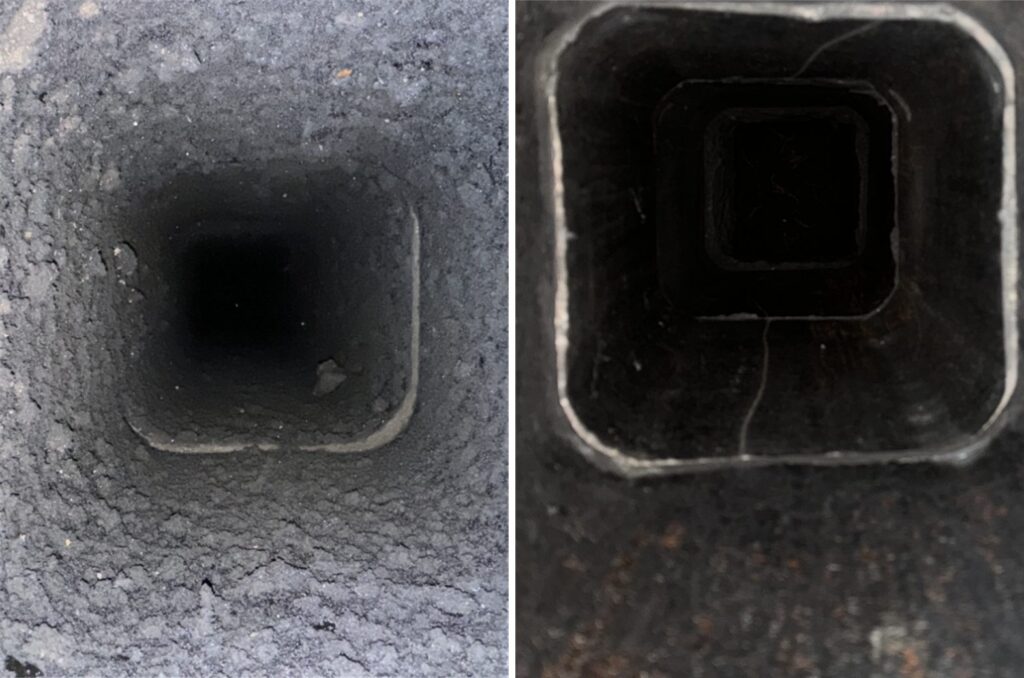
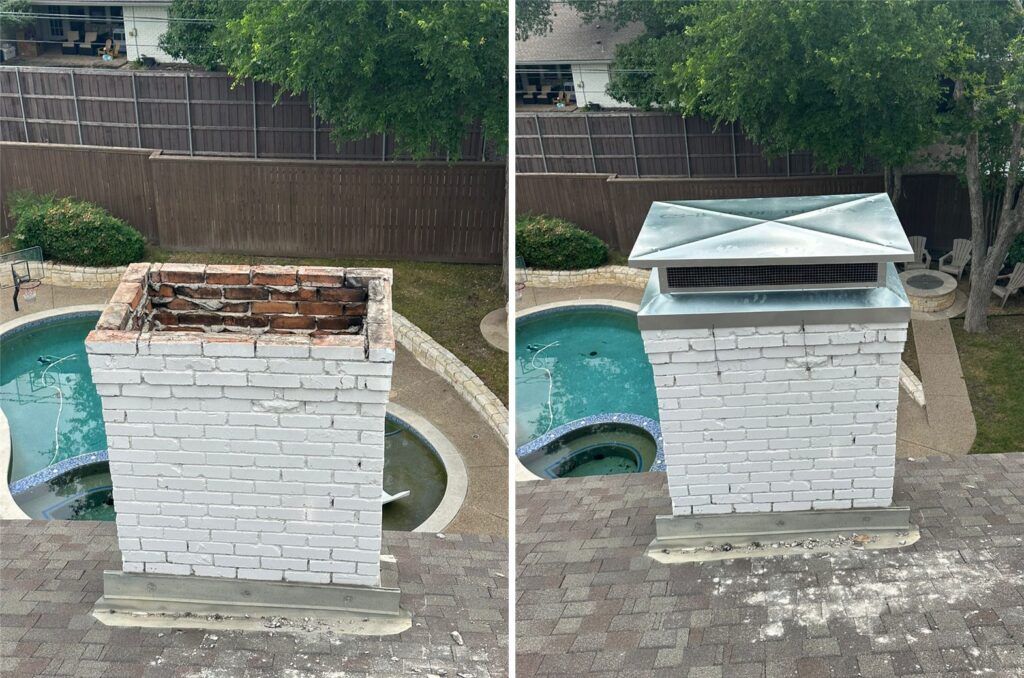
Before and after on every job
We know DFW homes and codes
Call (469) 902-2922
Not happy? We make it right
WHY IT MATTERS
The damper is a hinged metal plate that seals the fireplace when it is not in use. In a masonry fireplace it usually sits at the throat, where the firebox meets the smoke chamber, and the Chimney Safety Institute of America says it should be fully open before you light a fire.
Problems often show up the first cold night of the season, after months of sitting unused. A stuck handle, a plate that will not close, or heavy rust or warping all call for a look. Forcing a stuck damper can break the parts that still work, so have it checked before the next fire. Caps, crowns, and other worn parts fall under our chimney repair service.
None of these signs proves the damper is the cause. A blocked flue, a missing cap, or a draft problem can look the same, which is why the inspection comes before the quote. Damper problems often surface during a routine chimney inspection, which is a good time to check the movement and condition of the plate.
If smoke enters the room, let the fire die down, ventilate the house, and hold off on using the fireplace until it has been checked. Smoke and fumes from a fireplace are also a carbon monoxide concern, and the U.S. Fire Administration recommends carbon monoxide alarms on every level of your home. The EPA notes that fire officials advise getting a wood-burning appliance, chimney, and vent professionally inspected each year.
We are based in Plano and serve homeowners across Collin, Dallas, Tarrant, Denton, Rockwall, and Ellis counties. See our Plano service area page for the nearby communities we cover.
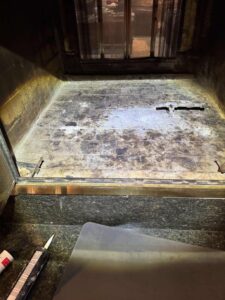
Recognize two or more? It’s time to give us a call.
01
02
03
04
05
THE WARRIOR STANDARD
1
2
3
Experienced crews and professional equipment. We solve 99% of the problems we find, and we answer every question honestly.
Book services together and we quote one clear total for the visit.
Call now and talk to our team, or send the form and we’ll call you back the same day with a clear quote.
No spam, no pressure. We call once with your quote.
Answers to the questions Dallas homeowners ask most about this service.
Often, yes. If the plate and moving parts are still sound, clearing the debris and freeing them can be enough. If parts are bent, corroded, or worn out, replacing them is the better route, and the photos will show you why.
No. The damper should be fully open before a fire is lit, and a damper that will not open can send smoke into the room. Do not use the fireplace until it has been checked.
Most chimney repairs are completed in one visit, usually one to three hours.
Often, yes. If the inspection finds a related problem, you see the photos and approve the scope before we do any extra work. If the damage is structural masonry, we will tell you honestly instead of patching over it.
The damper stays fully open while a fire burns and seals the fireplace when it is not in use. How to handle it after a fire depends on your fireplace, so ask a technician for the right timing.