Home » Services » Chimney Services » Chase Cover Installation
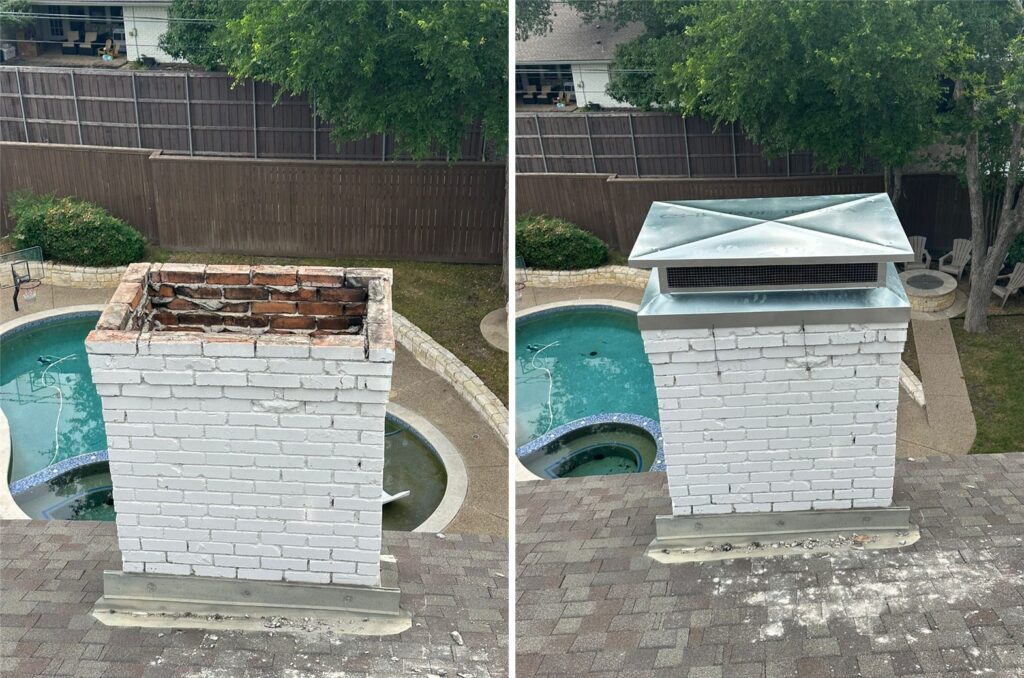
Before and after on every job
We know DFW homes and codes
Call (469) 902-2922
Not happy? We make it right
WHY IT MATTERS
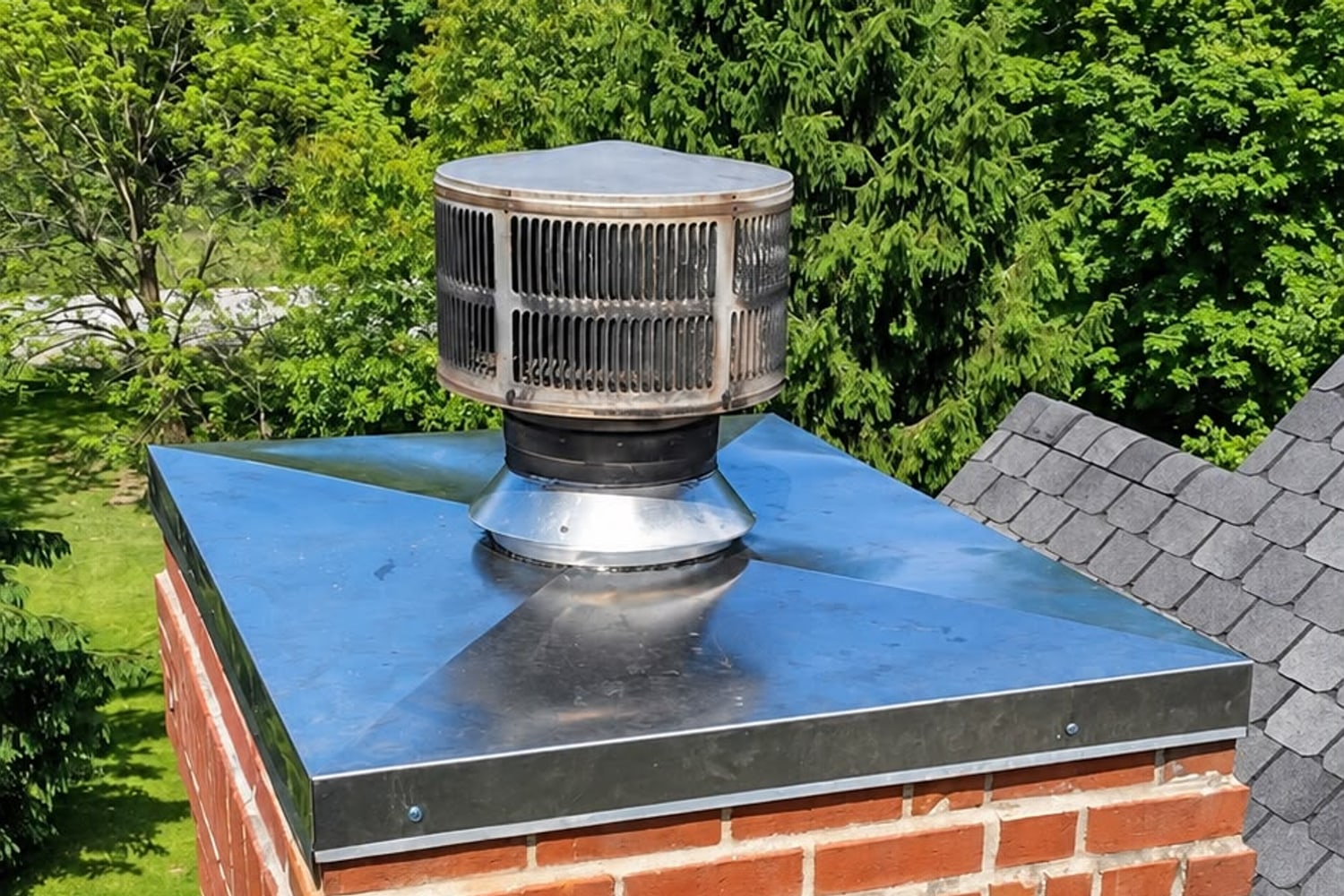
On a masonry chimney the concrete crown sheds water off the top. On a framed chimney, that job belongs to the chase cover: a metal lid over the whole top of the chase, with the flue and its cap poking through. Builders often use a thin galvanized cover that rusts within a few years, and once it rusts through or sits flat and pools water, rain runs straight down into the chase.
We measure the chase and install a proper cover, sloped to drain and made from stainless or aluminum that won’t rust out. It works with the flue’s chimney cap above it and protects the chase siding below. If water has already gotten in, we’ll flag any chimney repair the chase needs before we close it up.
Recognize two or more? It’s time to give us a call.
01
02
03
04
05
THE WARRIOR STANDARD
1
2
3
Experienced crews and professional equipment. We solve 99% of the problems we find, and we answer every question honestly.
Book services together and we quote one clear total for the visit.
Call now and talk to our team, or send the form and we’ll call you back the same day with a clear quote.
No spam, no pressure. We call once with your quote.
Answers to the questions Dallas homeowners ask most about this service.
The chase cover is the metal lid over the whole top of a framed chimney, like a crown. The chimney cap is the smaller piece that covers the flue opening itself. On a framed chimney you usually have both, and the flue and cap pass through the chase cover.
Most builders install a thin galvanized cover to save money, and galvanized steel rusts, especially where water pools on a flat cover. That’s why we install stainless or aluminum, sloped to drain, so it doesn’t rust out and pond water.
A small issue can sometimes be sealed, but once a cover is rusting through or pooling water, patching buys a little time and no more. Replacing it with a sloped stainless cover is the fix that actually keeps the chase dry.
Often, yes. A failed chase cover is one of the most common ways water gets into a framed chimney. We check the cover, the flue collar, and the siding so we fix the actual entry point, not just the stain.
A quality stainless cover, properly sloped and sealed, can last for decades, far longer than the galvanized cover most homes start with. We tell you what we’re installing and why before we do it.